Fire Suppression Systems

Fire Suppression Systems

High Pressure Carbon Dioxide System

Inert Gas Systems

Halocarbon Gases Systems

Fire Sprinkler System Components

Water Spray Deluge System Components

Water Mist System

Foam Generation Package

Foam Discharge Outlets

Twin Agent System

Kitchen Fire Protection System

Dry Chemical Powder System

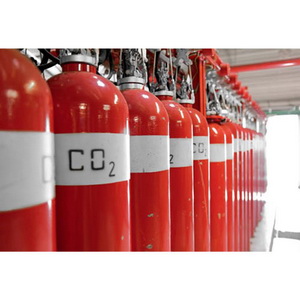
Carbon Dioxide (High Pressure) Fire Suppression System

Carbon dioxide (CO2) is a colorless, odorless, chemically inert, and electrically non-conductive agent, which is approximately 50% heavier than air. It leaves no residue after discharge, making it ideal for fire suppression in areas where minimal cleanup is required.

How It Works:

CO2 rapidly extinguishes fires by reducing the oxygen levels that support combustion in the protected area. This suppression method makes CO2 systems highly effective and efficient, often requiring minimal post-fire cleanup.

Applications:

CO2 suppression systems can be applied through both:

  • Total flooding: For full room protection.
  • Local application: Targeted application in specific areas of concern.

System Configuration:

CO2 is stored under high pressure (850 psig or 58 bar) in a liquid/vapor phase within high-pressure storage cylinders. When stored at an ambient temperature of 70 °F (21 °C), the CO2 is released to suppress fires.

Key Features:

  • Cost-effective and easily accessible refill agent.
  • Compatible with various detection and control systems.
  • Provides wide-range, proven, safe hazard protection.
  • Suitable for single-room to multiple-room protection.

Standard Compliance:

The CO2 system complies with NFPA-12 and is globally recognized by certified bodies such as UL, FM, and VdS.

Limitations of Use:

CO2 suppression should not be used in the following conditions:

  • Chemicals with their own oxygen supply, such as cellulose nitrate (old movie film) or gunpowder, which can oxidize rapidly in the absence of air.
  • Reactive metals, including Lithium, Sodium, Potassium, Magnesium, Titanium, Uranium, or Plutonium.
  • Metal Hydrides, including Sodium Hydride, Lithium Hydride, Calcium Hydride, Lithium Aluminum Hydride, and Sodium Borohydride.
  • Normally occupied spaces, where personnel may be present, due to the oxygen displacement nature of CO2.

This CO2 system provides reliable and effective fire suppression while maintaining safety standards across various industrial applications.

Inert Gas Fire Suppression System

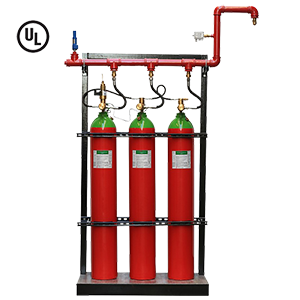
Inert gases such as Nitrogen (N2), Argon (Ar), and various mixes of these gases are commonly used as fire suppression agents, offering effective protection with zero environmental impact.

How It Works:

Inert gas fire suppression systems work by displacing oxygen in the protected area. This reduces the oxygen level from the normal 21% to a point where combustion cannot be supported, effectively suppressing the fire without causing harm to the environment or leaving residue after discharge.

Types of Inert Gas Systems:

There are several types of inert gas systems based on different gases or mixtures:

  • IG-100: Nitrogen (N2) – 100% nitrogen.
  • IG-01: Argon (Ar) – 100% argon.
  • IG-55 or Argoniteâ„¢: 50% Nitrogen (N2) and 50% Argon (Ar).
  • IG-541 or INERGENâ„¢: 6-8.4% CO2, 37.2-42.8% Argon (Ar), and 48.8-55.2% Nitrogen (N2).

System Configuration:

When used as a fire-fighting agent, inert gases are stored under high pressure in liquid phase inside high-pressure storage cylinders. These cylinders typically contain gas at 2900 psig (200 bar) or 4350 psig (300 bar). Common cylinder sizes include 80L or 140L.

Key Features:

  • Cost-effective and easy to access when refills are needed.
  • Wide range of proven safe hazard protection.
  • Environmentally friendly, with no impact on global warming or ozone depletion.

System Compliance:

The inert gas suppression system is based on NFPA-2001 and EN 15004 standards and is globally recognized by certified bodies such as UL, FM, and VdS.

Limitations of Use:

Inert gas suppression should not be used in the following conditions:

  • Chemicals with their own oxygen supply, such as cellulose nitrate (old movie film) or gunpowder, which can cause rapid oxidation without air.
  • Reactive metals, including Lithium, Sodium, Potassium, Magnesium, Titanium, Uranium, or Plutonium.
  • Spaces with low endurance against positive pressure, where the pressure from the gas release could cause damage.

Inert gas systems offer a safe, environmentally friendly, and highly reliable method for fire suppression, particularly in sensitive or high-risk environments.

Halocarbon gases fire suppression systems

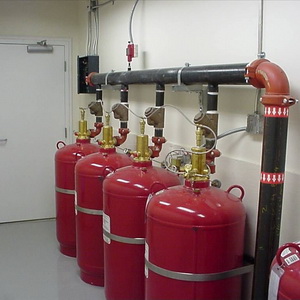
Synthetic gases are highly effective fire suppression agents that offer optimal properties for protecting various types of fire hazards. These agents are known for their fast discharge capabilities and minimum gas requirements, making them a preferred option in many gaseous fire suppression systems.

Types of Synthetic Gaseous Agents:

The most commonly recognized agents include:

  • HFC-227ea (FM-200â„¢, NAFS 227â„¢, etc.): One of the most widely used gaseous agents for fire suppression.
  • HFC-125 (NAFS 125â„¢, ECARO-25®, etc.): Another popular agent known for its quick extinguishing capabilities.
  • FK-5-1-12 (3M NOVEC 1230â„¢): A clean agent with low environmental impact and high efficiency.

Pressure Storage Ranges:

These systems typically use two pressure storage ranges:

  • 25 bar
  • 42 bar

This variation allows the selection of the optimal pressure level based on specific needs and installation requirements.

Key Features:

  • Minimal hardware and gas requirements compared to other gaseous suppression systems, making it more efficient and cost-effective.
  • Fast release and extinguishing time, ensuring quick fire suppression.
  • Safe for normally occupied areas, providing fire protection without compromising safety for personnel.

Limitations of Use:

Similar to other fire suppression systems, synthetic gaseous agents have certain limitations:

  • Chemicals with their own oxygen supply, such as cellulose nitrate (old movie film) and gunpowder, which can cause rapid oxidation in the absence of air.
  • Reactive metals, including Lithium, Sodium, Potassium, Magnesium, Titanium, Uranium, or Plutonium.

These synthetic gaseous agents provide an efficient, fast, and safe method for fire suppression in sensitive environments, ensuring high performance with minimal environmental impact.

Fire Sprinkler System Components

Our firefighting systems are designed to provide the most efficient and reliable suppression solutions during the critical early stages of a fire. With a wide range of equipment available, we ensure that your fire protection infrastructure is up to the task for various applications.

Available Equipment upon Request:

  • Fire Rated Booster Pump (according to NFPA-20): Available in sizes ranging from 100 GPM to 5,000 GPM to meet different water supply requirements.
  • Jockey Pump: Maintains system pressure and reduces wear on the main pump.

Sprinkler Systems:

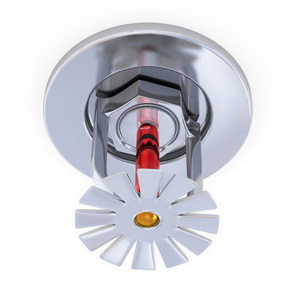
  • Sprinkler Heads: Available in various types, including upright, pendent, sidewall, extended coverage, standard/quick response, ESFR, dry sprinkler, and residential sprinkler models.
  • Sprinkler Guards and Escutcheon: Protect and cover sprinkler heads for durability and efficiency.
  • Sprinkler System Control Valves: Including wet alarm valves, dry pipe valves, pre-action valves, deluge valves, pressure regulating valves, riser vent valves, zone control valves, test & drain valves, etc.

Piping Equipment:

  • Metal Pipes: ERW or SMLS (Seamless) pipes.
  • CPVC Pipes: Available for various applications.
  • Fittings: Grooved, welded, threaded fittings, as well as hangars, supports, seismic protection systems, and flexible sprinkler hoses.
  • Expansion Joints: For managing pipe expansion.

Valves:

  • OS&Y Gate Valves, Butterfly Valves, Check Valves, and Strainers: For controlling and ensuring the flow and integrity of the firefighting system.

Instrumentation:

  • Flow Switches, Pressure Switches, Position Supervisory Switches, and Pressure Gauges: Essential for monitoring system status.
  • Release Control Panel and Zone Indication Panel: For clear communication and efficient system monitoring.
  • Alarm Devices: Ensuring immediate response in case of fire.

Air Units for Dry Pipe Systems:

  • Tank Mounted Compressors, Riser Mounted Compressors, Nitrogen Packages, Air Maintenance Devices, Filter Units, and Dehumidifiers: To ensure dry pipe systems are maintained and ready for use.

This extensive range of high-quality firefighting equipment ensures that your fire suppression system is equipped for rapid response, effective fire control, and compliance with the latest standards.

Water Spray Deluge System Components

Water is a key component in firefighting due to its cooling effect, which helps to reduce the temperature in areas adjacent to fire hazards, thereby preventing the fire from spreading further. Our comprehensive range of equipment ensures effective water-based suppression and control in various fire protection applications.

Available Equipment upon Request:

  • Fire Rated Booster Pump (according to NFPA-20): Available in sizes ranging from 100 GPM to 5,000 GPM to meet different water flow needs.
  • Jockey Pump: Used to maintain system pressure and minimize wear on the main pump.

Spray Nozzles:

  • Full Cone, Flat Cone, and Reverse Spray Nozzles: Designed for various water spray patterns depending on the application.

Deluge Valve Systems:

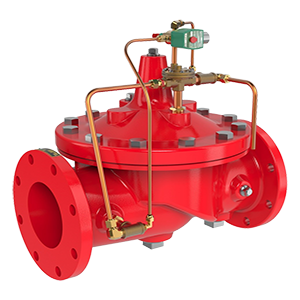
  • Deluge Valves: Available with options such as on/off control, pressure regulating, and remote reset. Materials range from ductile iron to corrosion-resistant Ni. Al. Bronze Alloy.
  • Deluge Valve Skid Package: For easy installation and transport.
  • Deluge Valve Cabinet Package: Provides convenient storage and accessibility for deluge valve systems.

Freezing Protection Solutions:

  • Ensuring your system remains operational even in freezing conditions.

Piping Equipment:

  • Metal Pipes: ERW or SMLS (Seamless) pipes for water supply.
  • CPVC Pipes: Used for certain firefighting applications.
  • Fittings: Grooved, welded, and threaded fittings, as well as hangars, supports, seismic protection systems, and flexible sprinkler hoses.
  • Expansion Joints: For managing thermal expansion in piping systems.

Valves:

  • OS&Y Gate Valves, Butterfly Valves, Check Valves, and Strainers: For efficient control of water flow in the system.

Instrumentation:

  • Flow Switches, Pressure Switches, Position Supervisory Switches, and Pressure Gauges: For monitoring system performance.
  • Release Control Panel and Alarm Devices: To activate and alert personnel in case of a fire emergency.

This extensive lineup of equipment ensures that your water-based firefighting system is efficient, effective, and capable of handling various fire hazards with precision.

Water Mist System

Water is a key component in firefighting due to its cooling effect, which helps to reduce the temperature in areas adjacent to fire hazards, thereby preventing the fire from spreading further. Our comprehensive range of equipment ensures effective water-based suppression and control in various fire protection applications.

Available Equipment upon Request:

  • Fire Rated Booster Pump (according to NFPA-20): Available in sizes ranging from 100 GPM to 5,000 GPM to meet different water flow needs.
  • Jockey Pump: Used to maintain system pressure and minimize wear on the main pump.

Spray Nozzles:

  • Full Cone, Flat Cone, and Reverse Spray Nozzles: Designed for various water spray patterns depending on the application.

Deluge Valve Systems:

  • Deluge Valves: Available with options such as on/off control, pressure regulating, and remote reset. Materials range from ductile iron to corrosion-resistant Ni. Al. Bronze Alloy.
  • Deluge Valve Skid Package: For easy installation and transport.
  • Deluge Valve Cabinet Package: Provides convenient storage and accessibility for deluge valve systems.

Freezing Protection Solutions:

  • Ensuring your system remains operational even in freezing conditions.

Piping Equipment:

  • Metal Pipes: ERW or SMLS (Seamless) pipes for water supply.
  • CPVC Pipes: Used for certain firefighting applications.
  • Fittings: Grooved, welded, and threaded fittings, as well as hangars, supports, seismic protection systems, and flexible sprinkler hoses.
  • Expansion Joints: For managing thermal expansion in piping systems.

Valves:

  • OS&Y Gate Valves, Butterfly Valves, Check Valves, and Strainers: For efficient control of water flow in the system.

Instrumentation:

  • Flow Switches, Pressure Switches, Position Supervisory Switches, and Pressure Gauges: For monitoring system performance.
  • Release Control Panel and Alarm Devices: To activate and alert personnel in case of a fire emergency.

This extensive lineup of equipment ensures that your water-based firefighting system is efficient, effective, and capable of handling various fire hazards with precision.


4o mini
You said:
A water mist system is a fire protection system, which uses very fine water sprays. The micronized water droplets allow the water mist to control, suppress or extinguish fires by: cooling effect displacing oxygen by evaporation of water attenuating radiant heat by the small droplets themselves System general architecture is similar to sprinkler system but the pump (or gas pump) unit produce very high pressure (near 100 bar) to be able micronize water at spray heads (sprinkler heads). Lots of hazard can control and suppress by water mist system from residential buildings to industrial plants.
ChatGPT said:

Water Mist Fire Protection System

A water mist system is an advanced fire protection solution that uses ultra-fine water droplets to suppress, control, or extinguish fires. The system is designed to efficiently address fire hazards across a wide range of applications, from residential buildings to industrial plants.

How It Works:

The micronized water droplets created by the system allow it to control or extinguish fires through the following mechanisms:

  • Cooling Effect: The tiny water droplets absorb heat and reduce the temperature of the fire and surrounding areas.
  • Displacement of Oxygen: The evaporation of water droplets displaces oxygen, which reduces the fire’s fuel source and suppresses combustion.
  • Attenuating Radiant Heat: The small droplets reflect and scatter radiant heat, further controlling the spread of the fire.

System Design:

The general architecture of a water mist system is similar to a traditional sprinkler system, but it operates with much higher pressure. The pump unit (or gas pump) generates pressures near 100 bar to ensure that water is micronized before it is released through the spray heads (sprinkler heads).

Applications:

Water mist systems are highly effective across various hazard levels and can be used to control and suppress fires in environments such as:

  • Residential Buildings: Offering an efficient and space-saving solution for fire protection.
  • Industrial Plants: Protecting machinery, equipment, and high-risk areas with a minimal water usage approach.

Water mist systems provide an eco-friendly and effective method of fire suppression, especially in environments where traditional systems may not be suitable due to water damage concerns or specific hazard conditions.

Foam Generation Package

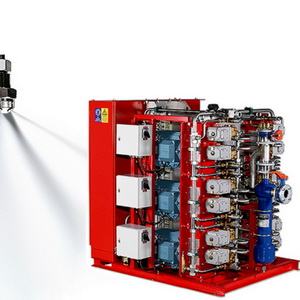
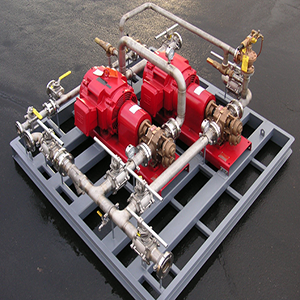
Our foam injection systems are designed to mix concentrated foam with water at a preset injection ratio to create an effective foam solution for fire suppression. These systems are highly adaptable and can be configured in a variety of ways depending on your specific needs. They are ideal for use in fire suppression applications requiring foam, and may include a foam storage tank to support the system.

Key Components and Configurations:

  1. Atmospheric Storage Tank and Inline Inductor:
    • Uses an atmospheric foam storage tank in combination with an inline inductor to mix foam concentrate with water at the desired ratio.
  2. Gas-Pressurized Premix Storage Tank:
    • A gas-pressurized tank holds the foam concentrate, which is mixed with water and then delivered to the system for fire suppression.
  3. Bladder Tank with Mixer (200L to 20,000L):
    • A bladder tank is used to store foam concentrate, and the built-in mixer ensures the foam is properly mixed before being injected into the water system.
  4. Balance-Pressure Foam Injection System:
    • A system that maintains equal pressure on both the foam concentrate and water lines to ensure the accurate mixing of foam solution, even in complex fire suppression systems.
  5. Inline Balance-Pressure Foam Injection System:
    • This system incorporates an inline balance-pressure design to offer consistent foam solution mixing while optimizing space and minimizing pressure fluctuations.
  6. Foam Dosing Package:
    • A complete dosing package for precise foam delivery, ensuring the correct concentration for optimal fire-fighting performance.

These foam injection systems can be tailored to a range of industrial and commercial needs, offering reliable and efficient fire suppression for hazardous and critical environments. The systems are engineered to provide optimal foam coverage and performance, with configurations suitable for both small-scale and large-scale applications.

Foam Discharge Outlets

Our aspirated foam solution systems are designed to deliver foam at the desired expansion ratio, effectively directing it to fire hazard areas to suppress or control fires. These systems offer a variety of specialized models, each tailored to meet the unique needs of different fire protection scenarios.

Available Models:

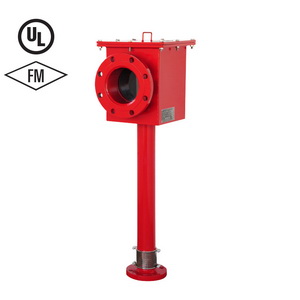
  • Foam Chambers for Fixed Roof Fuel Storage Tanks (with Backpressure Resistant Seal):
  • These chambers are designed for use in fixed roof fuel storage tanks, with backpressure-resistant seals ensuring foam distribution under challenging conditions.
  • Foam Maker and Foam Pourer for Floating Roof Fuel Storage Tanks or Dike Areas:
  • Specifically designed for floating roof tanks or dike areas, these models efficiently pour or spray foam to provide full coverage for fire suppression in critical storage areas.
  • Foam Spray Nozzles:
  • Spray nozzles are ideal for distributing foam in a controlled manner across large areas, ensuring thorough coverage to extinguish flames quickly.
  • Foam Sprinklers:
  • Foam sprinklers provide a consistent discharge of foam, allowing for effective suppression of fires in areas such as warehouses, fuel storage, and chemical plants.
  • Grate Nozzles:
  • These nozzles are designed to generate a fine, uniform foam distribution, ideal for covering open areas or structures at high risk of fire.
  • Foam Monitors:
  • Foam monitors are used for high-flow foam application, allowing operators to direct foam precisely onto fire hazards using remote-controlled or manual operation.
  • High Backpressure Foam Generator with Related Rupture Disc:
  • This system is designed to handle high-pressure situations, using a foam generator that can safely manage backpressure, equipped with a rupture disc for safety.
  • High Expansion Foam Generator (with or without Fan):
  • These generators create foam at high expansion ratios to cover larger areas more efficiently. They can be equipped with or without fans, depending on the application and required foam dispersion.

These systems are designed for robust, efficient foam delivery across various environments, ensuring fast and effective fire suppression with minimal water usage. Whether in storage tanks, industrial sites, or high-risk areas, our aspirated foam solutions provide the necessary tools for managing large-scale fires effectively.

Twin Agent System

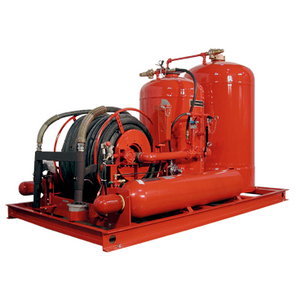
The Twin Agent Fire Extinguishing System combines the rapid fire knockdown power of dry chemical agents with the effective vapor-suppressing properties of foam (AFFF or CAFS). This hybrid approach provides a robust solution for tackling fires in environments with high risks, especially those involving flammable liquids.

How It Works:

  • Dry Chemical Agent: This rapidly knocks down the fire by interrupting the chemical reaction in the flame. The dry chemical agent works quickly to suppress the fire at the initial stages.
  • Foam (AFFF or CAFS): After the fire is knocked down, foam forms a vapor-suppressing blanket over the fuel, preventing the release of flammable vapors and helping to cool the fuel. This additional layer of protection ensures that the fire does not reignite.

Key Applications:

  1. Twin Hose Lines: In standard applications, twin hose lines are connected together at the nozzle. One hose delivers the dry chemical agent, while the other delivers foam, allowing for efficient suppression in a single operation.
  2. ARFF Vehicles: Twin agent systems are also used in Aircraft Rescue and Firefighting (ARFF) vehicles. These vehicles are equipped with both dry chemical agents and foam to handle fires in aviation scenarios, where rapid response is critical.
  3. Ground-Mounted Monitors: For high-hazard locations in facilities that store or produce flammable liquids, twin agent systems can be installed on ground-mounted monitors, allowing for effective fire control in large-scale industrial settings.
  4. Offshore Platforms: The system is widely used on helipads of offshore platforms, where fire hazards are prevalent due to the presence of flammable liquids and gases. The combination of dry chemical agents and foam provides an efficient and reliable extinguishing solution.

Advantages:

  • Rapid Knockdown: The dry chemical agent ensures a fast knockdown of flames, limiting the spread and potential escalation of the fire.
  • Long-Lasting Protection: The foam lays a protective blanket over the hazard, preventing the release of flammable vapors and reducing the likelihood of re-ignition.
  • Versatility: Suitable for use in a wide range of environments, from mobile firefighting vehicles to fixed fire suppression systems in high-risk industrial facilities.

The Twin Agent Fire Extinguishing System is an effective, versatile, and reliable solution for handling complex fire hazards, providing rapid suppression and long-lasting protection in demanding environments.

Kitchen fire protection system

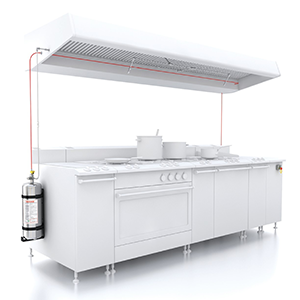
The Wet Chemical Kitchen Fire Suppression System is specially designed to meet the demanding needs of cooking environments, where grease fires and high temperatures present unique challenges. This system provides reliable protection for commercial kitchens, including those in restaurants, cafeterias, and industrial kitchens.

System Features:

  • Customized Design: Our system is tailored to meet the specific needs of your kitchen, with customizable options for detection, control, and cylinder sizes, ensuring optimal coverage and effectiveness for your unique layout and fire risk.
  • Cost-Effective Solution: The wet chemical kitchen system offers an affordable, pre-engineered solution that doesn’t sacrifice quality or performance. It is designed for quick and easy installation, saving both time and money during setup.

How It Works:

  • Wet Chemical Agent: The system uses a specially formulated wet chemical agent that effectively suppresses grease fires by cooling the flames and forming a barrier to prevent re-ignition. This agent is designed to work in environments where oils and fats are used for cooking, quickly extinguishing fires without creating additional hazards.
  • Automatic Activation: The system automatically detects fires through heat and smoke detectors. Upon detection, the agent is immediately discharged onto the cooking surface to suppress the fire.

Key Benefits:

  • Fast and Effective Suppression: Wet chemical agents rapidly suppress grease fires, providing immediate protection to cooking appliances and surrounding areas.
  • Prevents Re-Ignition: The wet chemical foam forms a protective layer over hot surfaces, preventing re-ignition and minimizing the risk of further damage.
  • Easy to Install and Maintain: Designed for straightforward installation, the system requires minimal upkeep and ensures reliable operation in the event of a fire.

Applications:

  • Commercial Kitchens: Ideal for use in restaurants, cafeterias, catering kitchens, and food processing facilities.
  • Industrial Kitchens: Suitable for large-scale cooking operations, including those in factories, universities, and hospitals.
  • Mobile Kitchens: Perfect for food trucks or temporary kitchens requiring portable fire protection.

The Wet Chemical Kitchen Fire Suppression System offers comprehensive protection for kitchens, delivering cost-effective, reliable, and easy-to-install fire suppression capabilities for a wide range of cooking applications.

Dry Chemical Powder Fire Extinguishing system

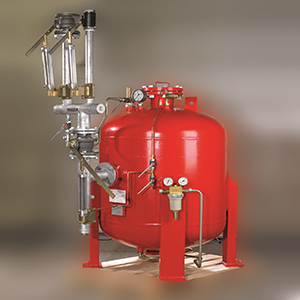
The Dry Chemical Powder Fire Extinguishing System is a powerful solution designed to rapidly suppress flames and control fires, especially in high-risk environments. When introduced directly to a fire, the dry chemical powder extinguishes flames almost immediately by interrupting the chemical reactions in the fire.

System Features:

  • Instant Fire Suppression: Dry chemical powder is highly effective in controlling and extinguishing fires in their early stages. It works by smothering the fire, interrupting the chemical reactions that sustain it, and preventing the spread of flames.
  • Specialized for Hazardous Fires: This system is ideal for fires involving bulk chemicals, liquefied gases, and other highly combustible materials that traditional firefighting systems may struggle with.
  • Large Capacity Solutions: Designed to meet the increasing demand for large-capacity systems, our solutions are engineered to protect high-risk facilities such as ships carrying LNG (Liquefied Natural Gas), LPG (Liquefied Petroleum Gas), and bulk chemical storage areas.

How It Works:

  • Rapid Flame Knockdown: The dry chemical powder is discharged directly onto the fire, rapidly cooling and smothering the flames. The powder is highly effective in controlling fires that involve chemicals, oils, fuels, and gases.
  • Effective in Harsh Conditions: The system is capable of working effectively in challenging conditions where other agents might be less effective, such as on ships, in industrial plants, or during the transport of hazardous materials.
  • Customized for LNG/LPG Protection: Our dry chemical powder system is specifically designed to offer robust protection for facilities that store or transport liquefied gases like LNG and LPG, as well as bulk chemicals.

Key Benefits:

  • Rapid and Effective Fire Control: The dry chemical powder rapidly suppresses flames and prevents fire escalation, ensuring a fast response to mitigate damage.
  • Ideal for Hazardous Materials: The system is tailored for use in environments with hazardous materials, ensuring that high-risk industries like shipping, chemical processing, and gas storage are protected.
  • Versatile and Reliable: Designed for use in a variety of applications, including ships, refineries, chemical plants, and other large-scale industrial operations.

Applications:

  • Marine Industry: Ideal for fire suppression on ships transporting LNG, LPG, and chemicals in bulk.
  • Chemical Plants: Effective in protecting industrial plants dealing with bulk chemicals and flammable agents.
  • Oil and Gas Industry: Provides protection in areas where flammable gases and chemicals are stored or processed.
  • Storage and Transport of Dangerous Goods: Ensures safety during the storage and transportation of hazardous materials.

Our Dry Chemical Powder Fire Extinguishing System offers a robust, fast-acting solution for industries dealing with high-risk, flammable materials. It ensures immediate fire suppression in critical applications where other methods may be less effective.

Scroll to Top